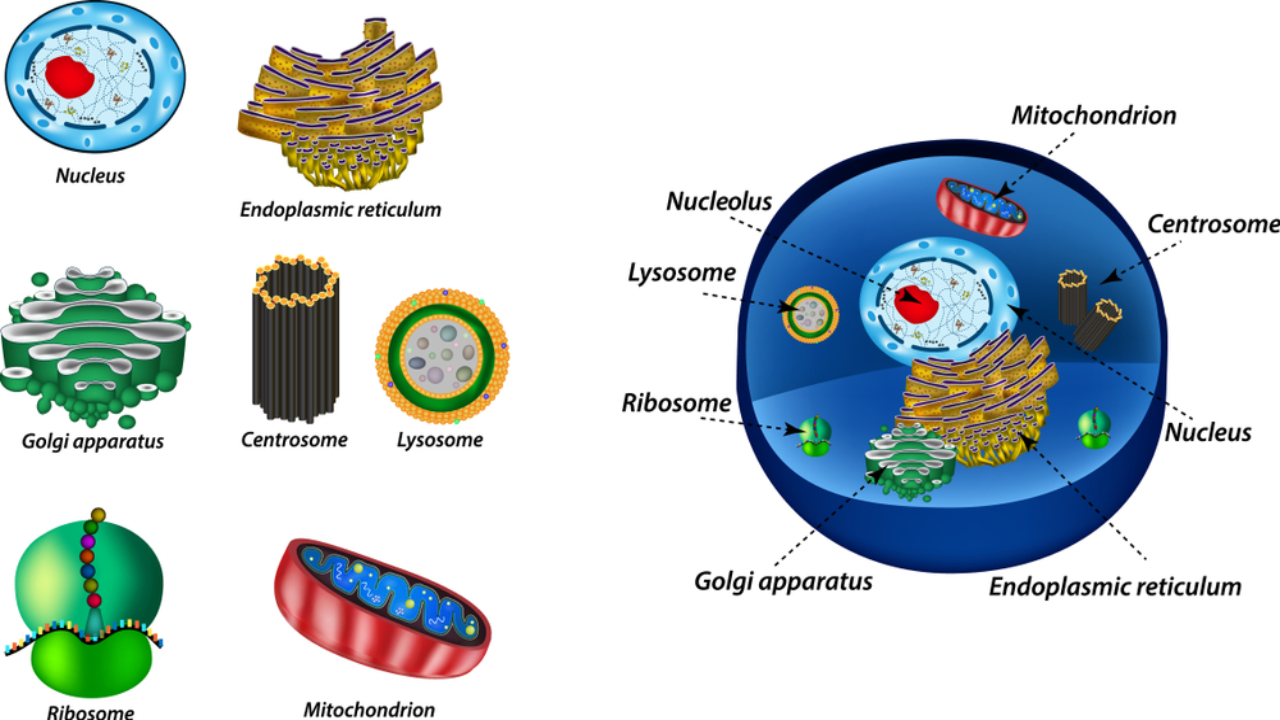
Introduction to Cells
Cells are the fundamental units of life, serving as the building blocks of all living organisms· They come in various shapes and sizes, each adapted to perform specific functions necessary for the survival and functioning of the organism· In this article, we will explore the different types of cells, their functions, and the organelles that enable them to carry out their roles·
Table of Contents
Types of Cells
Prokaryotic Cells:
Prokaryotic cells are simple, single-celled organisms without a distinct nucleus or membrane-bound organelles·
Examples include bacteria and archaea·
Despite their simplicity, prokaryotic cells perform essential functions such as metabolism, reproduction, and response to stimuli·
Eukaryotic Cells:
Eukaryotic cells are more complex than prokaryotic cells and contain a true nucleus enclosed within a membrane·
Examples include plant cells, animal cells, fungi, and protists·
Eukaryotic cells are highly specialized and perform diverse functions depending on their type and location within the organism·
Functions of Cells
1.Cellular Respiration:
Cellular respiration is a fundamental process in cells where energy is produced by converting glucose and oxygen into ATP (adenosine triphosphate) and carbon dioxide· ATP serves as the primary energy currency of the cell, powering various cellular activities such as metabolism, movement, and synthesis of cellular components·
The process of cellular respiration occurs in multiple stages:
Glycolysis: Glucose is broken down into pyruvate molecules in the cytoplasm, producing a small amount of ATP·
Krebs Cycle (Citric Acid Cycle): Pyruvate molecules are further oxidized in the mitochondria, generating ATP and electron carriers (NADH and FADH2)·
Electron Transport Chain (ETC): Electrons from NADH and FADH2 are transported through a series of protein complexes in the inner mitochondrial membrane, leading to the production of large amounts of ATP through oxidative phosphorylation·
The energy produced through cellular respiration is crucial for maintaining essential cellular functions, including biosynthesis, active transport, muscle contraction, and nerve impulse transmission·
2· Photosynthesis:
Photosynthesis is a vital process carried out by plant cells, algae, and some bacteria, where light energy is converted into chemical energy in the form of glucose· This process occurs primarily in the chloroplasts, using chlorophyll and other pigments to capture light energy·
The overall equation for photosynthesis is:
6CO2+6H2O+light energy→C6H12O6+6O26CO2+6H2O+light energy→C6H12O6+6O2
Photosynthesis consists of two main stages:
Light-dependent reactions: Light energy is used to split water molecules into oxygen, electrons, and protons· The electrons are then transferred through a series of electron carriers, generating ATP and NADPH·
Calvin Cycle (Dark reactions): ATP and NADPH produced in the light-dependent reactions are used to fix carbon dioxide into glucose through a series of enzyme-mediated reactions·
In addition to producing glucose, photosynthesis also releases oxygen as a byproduct, which is vital for the survival of aerobic organisms·
3· Transport:
Cells regulate the transport of molecules across their membranes to maintain internal homeostasis and respond to changes in their environment· This transport occurs through various mechanisms:
Diffusion: Movement of molecules from an area of higher concentration to an area of lower concentration, down the concentration gradient·
Osmosis: Diffusion of water molecules across a semi-permeable membrane, from an area of lower solute concentration to an area of higher solute concentration·
Active Transport: Energy-dependent process that moves molecules against their concentration gradient, requiring ATP·
Facilitated Diffusion: Passive transport facilitated by transport proteins, allowing specific molecules to move across the membrane·
These transport processes ensure the uptake of essential nutrients (such as glucose, amino acids, and ions) and the removal of waste products (such as carbon dioxide and metabolic waste) from the cell·
4· Cell Division:
Cell division is a fundamental process in which a parent cell divides to produce two or more daughter cells· It is essential for growth, repair, and reproduction in multicellular organisms· There are two main types of cell division:
Mitosis: Division of a somatic (body) cell into two genetically identical daughter cells, each with the same number of chromosomes as the parent cell· Mitosis is involved in growth, tissue repair, and asexual reproduction·
Meiosis: Specialized cell division that occurs in reproductive cells (gametes) to produce haploid daughter cells with half the number of chromosomes as the parent cell· Meiosis is essential for sexual reproduction and ensures genetic diversity in offspring·
By undergoing cell division, organisms can grow, develop, and maintain the integrity of their tissues and organs throughout their lifespan·
Cell Organelles and Their Functions
1.Nucleus:
Function: The nucleus is the control center of the cell, housing the cell’s genetic material (DNA) in the form of chromosomes· It regulates cellular activities such as growth, metabolism, and reproduction by controlling gene expression and protein synthesis through transcription and mRNA processing·
2· Mitochondria:
Function: Mitochondria are known as the powerhouses of the cell because they generate energy in the form of ATP (adenosine triphosphate) through cellular respiration· They break down glucose and other organic molecules in a series of metabolic pathways, such as the Krebs cycle and oxidative phosphorylation, to produce ATP· Mitochondria also play roles in apoptosis (programmed cell death) by releasing signaling molecules and in calcium signaling, which regulates cellular processes·

3· Endoplasmic Reticulum (ER):
Function: The endoplasmic reticulum is a network of membranous tubules and sacs involved in protein synthesis, lipid metabolism , and calcium storage and release·
Rough ER: Contains ribosomes on its surface and is responsible for protein synthesis, folding, and modification·
Smooth ER: Lacks ribosomes and is involved in lipid synthesis, detoxification of drugs and toxins, and calcium ion storage and release·
4· Golgi Apparatus:
Function: The Golgi apparatus is responsible for modifying, sorting, and packaging proteins and lipids synthesized in the ER for transportation within the cell or secretion outside the cell· It consists of a series of flattened membrane-bound sacs called cisternae·
5· Lysosomes:
Function: Lysosomes are membrane-bound organelles containing digestive enzymes (such as acid hydrolases) that break down waste materials, foreign invaders (such as bacteria and viruses), and cellular debris through a process called hydrolysis· They play a crucial role in cellular recycling, autophagy, and apoptosis regulation·
6· Vacuoles:
Function: Vacuoles are membrane-bound sacs found in plant and some animal cells, primarily involved in storage, digestion, and waste removal· In plant cells, large central vacuoles store water, ions, pigments, and nutrients, providing turgor pressure for structural support and regulating cell volume·
7· Chloroplasts:
Function: Chloroplasts are organelles found in plant cells and some algae, responsible for photosynthesis, the process by which light energy is converted into chemical energy (glucose)· Chloroplasts contain chlorophyll and other pigments that capture light energy, along with enzymes and molecular machinery for the synthesis of organic compounds·
8· Cell Membrane:
Function: The cell membrane, also known as the plasma membrane, is a selectively permeable lipid bilayer that surrounds the cell, separating its internal environment from the external environment· It regulates the passage of substances such as ions, nutrients, and waste molecules in and out of the cell, maintains cellular homeostasis, and provides structural support and protection· Additionally, the cell membrane contains various proteins involved in cell signaling, cell adhesion, and molecular transport·